



![[#1] I See You](http://eyeslife.com/cdn/shop/articles/Blog_Hero__I_See_You_2195982b-1ea8-4202-a74c-e1d3dba87e4f.jpg?v=1775776045&width=1100)
[#1] I See You
(5 min read)
I don't see well. But I see you.
I see you struggling to drive at night because of glare and halos.
I see you repositioning your glasses, wondering if it's the screen or your eyes.
I see you sitting across from a doctor who's explaining something you don't fully understand, nodding anyway — in disappointment.
I see you in that Facebook group at 10pm, learning about your newly diagnosed eye condition and hoping you don't have to ride this struggle-bus too.
I see you typing: “Dear Dr. Google: What is Keratoconus? What is Meibomian Gland Dysfunction? What is Sjögren’s disease?”
I see you, day by day, giving up things you love because you can’t see with confidence.
No one fully understands. And those who might — don't get it.
I see you because I was you.

My name is Jeff Sullivan. In the optometry world, I’m known as Jeff Scleral.
Here’s my story. Will you see me?
It was 2006. I'd just driven cross-country from Boston to California to join my Harvard classmate's brand new tech startup. During that seven-day drive, I struggled to read road signs. I missed a lot of exits.
Two months later, an eye doctor at Kaiser Permanente in Santa Clara said: "I think you have Keratoconus. I can't correct your vision to 20/20. Sorry."
I didn't know what that meant. I spent the next two years trying to find out. Doctor after doctor. Scan after scan.
No solutions.
Soft contacts didn't work — constantly rotating out of alignment. Rigid lenses were too painful to wear. And every updated glasses prescription fell short.
Life got harder because of my pointy corneas. I couldn’t see with confidence.
In 2008, I moved to London, partly so I could avoid driving. I used intuition to "read" signs on the Tube or at the airport. I quit skiing – the one sport I loved. And I never knew if you were making eye contact with me at work, across a bar, or down the street. I waved at a lot of strangers. At least I was friendly.
I tried Moorfields Eye Hospital — one of the best eye hospitals in the world. No progress. Months between appointments.
So I decided I was done. I accepted my terrible vision. I stopped looking for a solution.
That was a big mistake.
The cost: five years of living fully.
In 2013, I used Yelp to find an optometry practice in Boston. One doctor stood out because of reviews mentioning Keratoconus. I felt something I hadn’t felt in a long time: Hope.
His name was Dr. Frank. He said: "Have you ever tried a scleral lens?” I hadn’t. I had never heard of them.
The fitting process cost $1,600. I didn’t have US insurance or much money. I took out my credit card. There was no guarantee. Only a small, but very real, feeling of hope.
A week later, my lenses arrived. Dr. Frank put them in my eyes. I blinked. I looked around. Everything was clear. Everything had detail. I looked out the window and read the sign across the street: “Federal.”
And then I cried.
Life restarted at that moment.
Every morning since, when I put my lenses in, the miracle repeats. One doctor. One question. One appointment.
Low def (surviving) → High def (living).
Thank god I took action again.

I became obsessed with my life-changing lenses.
First, I flew to Denver to visit Acculens because I needed to understand how something this important actually gets made. Then I started reading medical journals. And a few years later, in 2020, I began attending optometry conferences. Not as a doctor, not as an industry rep, just as a patient who wants answers: Why did it take me so long to discover sclerals? Why are they so expensive? Who else might benefit from them?
At the Academy of Optometry in 2023, a renowned eye doctor saw me across the conference hall and exclaimed: "Hey, it’s Scleral Jeff!” The name stuck. Now here I am — Jeff Scleral, a rare patient who consistently gate-crashes doctor events. Even the after parties.
What I found from attending lectures makes me feel equally inspired and angry. Inspired because the innovation is real: doctors doing extraordinary work, technology advancing fast, and these custom lenses are genuinely changing lives. Angry because the latest knowledge and solutions reach patients so slowly. There are ~41,000 optometrists practicing in the United States. Of those, maybe 5,000 offer specialty lenses (e.g., scleral, ortho-K, RGP), and roughly half are truly committed fitters. That means fewer than 1 in 20 optometrists are equipped to do this at a high level. The odds of ending up in the right chair are shockingly low.
The gap between what's visually possible and “I give up” isn't a medical problem. It's a communication and action problem.
The trap most people fall into goes like this:
"If something better existed, my doctor would have told me — so I'll stop looking."
I believed that too. For five years.
That was a big mistake.

I built EyesLife to help people see with confidence. I want you to find the right eye doctor, have the best tools, and enjoy healthy eyes for a lifetime.
Just diagnosed? Struggling for years? Remember: "We've tried everything" is only true if you stop looking.
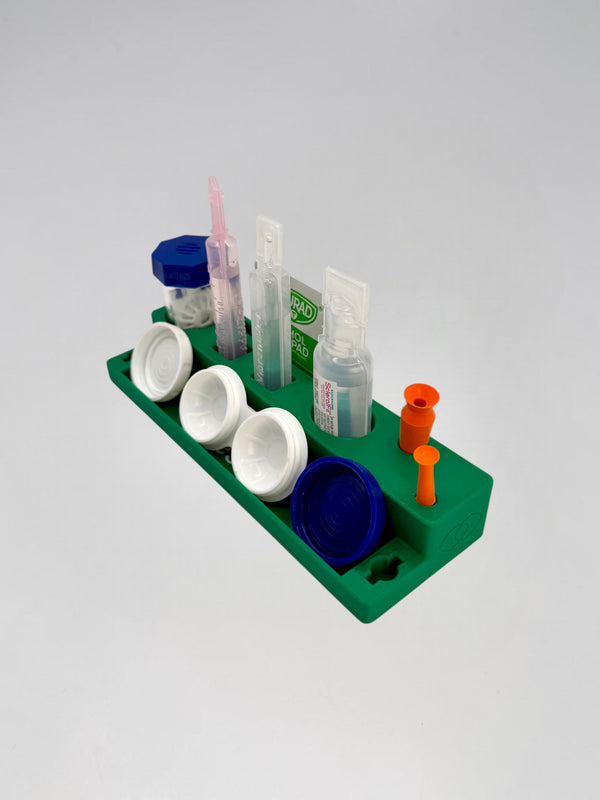
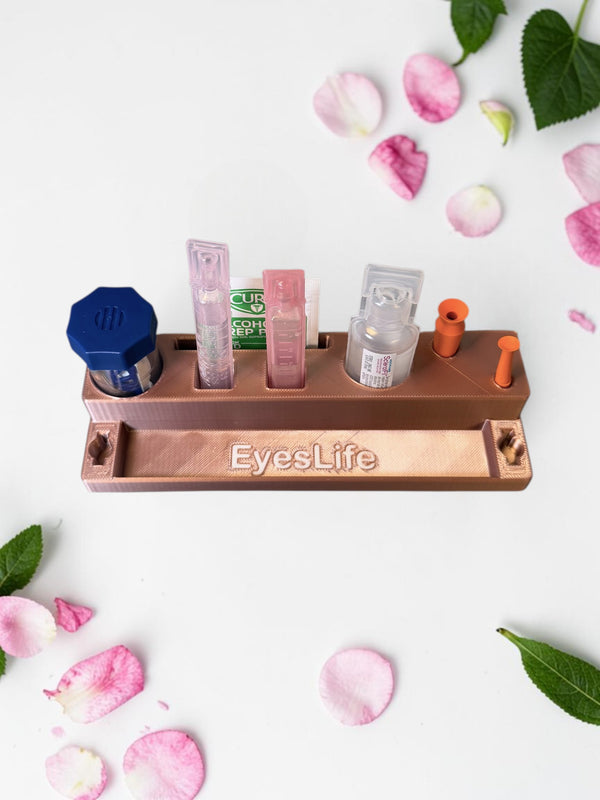
This blog is where I will share everything I've learned — from finding the right doctor to navigating costs to discovering (and building!) tools that make Scleral Life easier. You shouldn't have to figure this out alone.
I spent years feeling alone. I want you to feel the opposite. I want you to know someone has been exactly where you are, found a way through, and is here to show you the next door to open.
I DO see well. And I see you taking action.
— Jeff Scleral
